
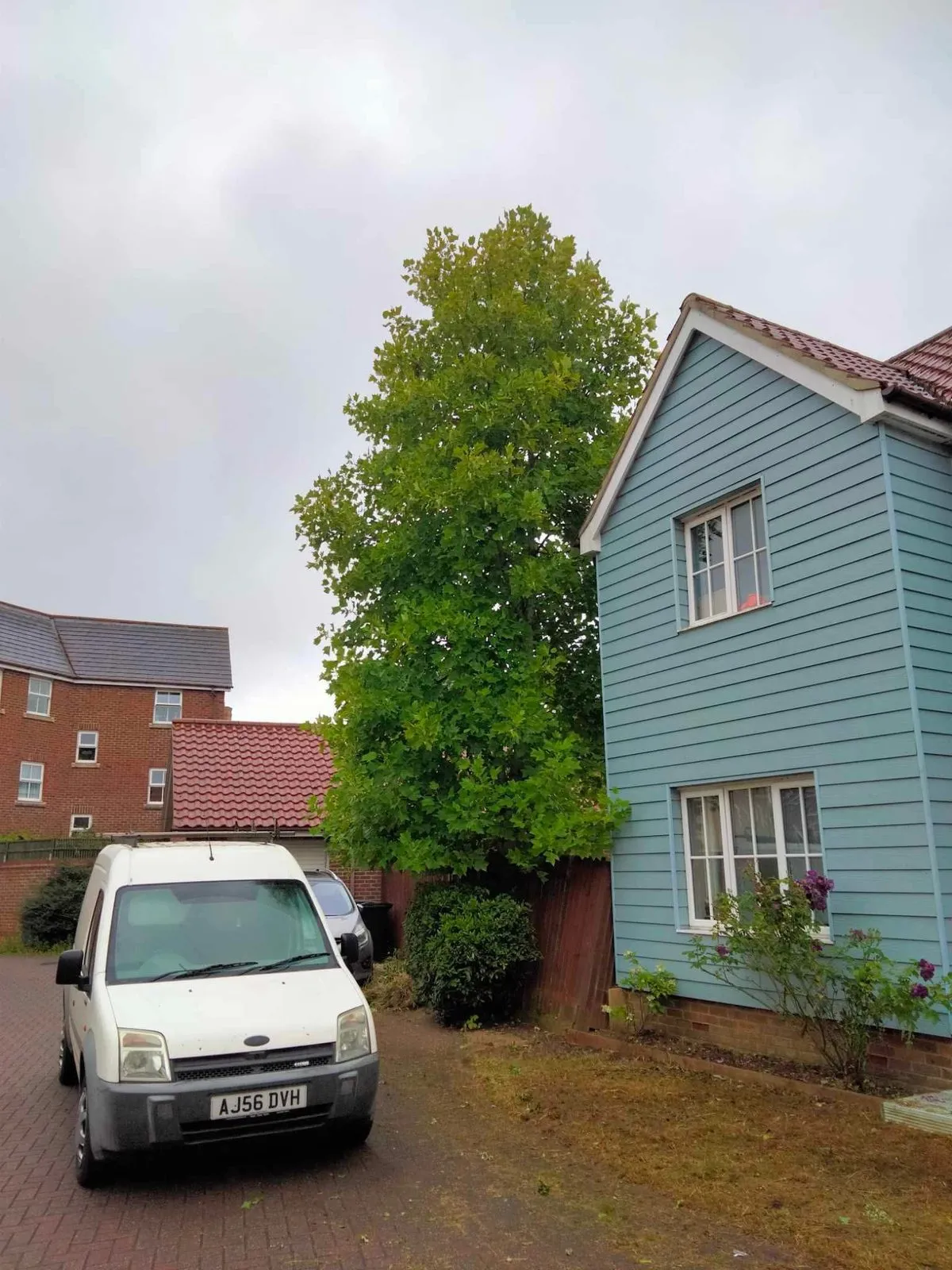
Norfolk gardens are full of privet, laurel, beech, hornbeam and the odd leylandii that got away. We trim the face, the top and the sides, including height reductions where the hedge can take it and you are happy with how brown a hard cut can look for a while. Laurel and privet generally break away again. A savage cut on an old conifer often does not.
Green waste can leave with us or stay as chippings if you have a place for mulch. Ladders and a careful top-cut are part of taller hedges. Very tall leylandii with no access, or anything over a highway, may be more than a garden trim — we will say so rather than balance on the wrong ladder.
What is included
- Top and sides brought back to an agreed line
- Height reductions on hedges that will recover
- Privet, laurel, beech, hornbeam, box and mixed native hedges
- Clearing clippings, or chipping them to stay on site
- A check for active nests before cutting in spring and summer
- Regular trims as part of a maintenance visit, if that is what you want
Worth knowing
- From March to August we look for nests before we cut. If birds are using the hedge, the job waits. It is an offence to damage a wild bird’s nest while it is in use, and it is also the decent thing.
- A hard renovation cut can leave a hedge looking bare. On laurel and privet that is often temporary. On leylandii, bare wood may stay bare. We explain that before the saw comes out.
- Evergreen hedges that have grown well over two metres and affect a neighbour can end up in a council complaint under the high hedges rules. We are not the council. If height is the argument, sort the agreement, then we will cut to it.
How it usually runs
01
Agree the line
Height, how tight the sides should be, and whether this is a trim or a renovation.
02
Check, then cut
Nests first in the breeding season. Then the top, then the faces, so the clippings fall clear.
03
Clear the base
A neat hedge with a knee-deep carpet of cuttings is not a finished job.
Questions
How often should a Norfolk hedge be cut?
Privet and leylandii can need two cuts a year if you want them tight. Beech, hornbeam and a mixed native hedge are often fine with one, timed outside the nesting season where you can. We will suggest a rhythm once we have seen the hedge.
Will you take the cuttings away?
Yes, if it is on the quote. Leaving them is cheaper. Chipping them back onto beds suits some gardens and not a small patio.
Can you reduce a hedge that is taller than the house?
Sometimes. Access, what is underneath, and whether the species will grow back from old wood decide it. If it needs climbing kit or a road closure, it is not a garden trim and we will tell you.
We cover Norwich and the Norfolk towns on the areas we cover page. If the garden is further out, ring and ask — the answer depends on the size of the job.